Animal · Antarctica, Chile, United States
Blue whale
Balaenoptera musculus — the name this animal has in the language scientists everywhere share.
The blue whale is the largest animal ever known to have lived on Earth, even bigger than the biggest dinosaurs. It swims through every ocean, from polar waters to the tropics.
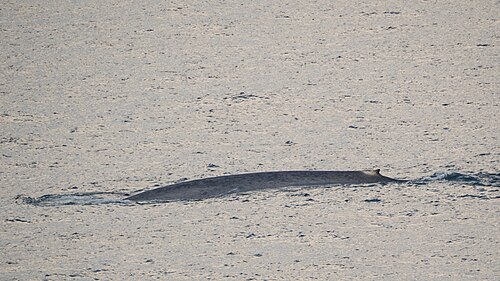
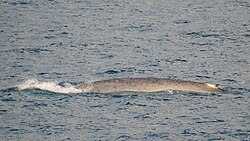
Picture credit: Carina Gsottbauer (CC BY-SA 4.0) · Carina Gsottbauer (CC BY-SA 4.0) · Wikimedia Commons
Where does the blue whale live?
Home: Open oceans worldwide, from polar to tropical waters.
In the wild you find it in: Antarctica, Chile, United States, Mexico, Iceland.
Conservation status from the IUCN: endangered.
The short profile
Fully grown it measures Up to 30 m long. It weighs about 100 000 kilograms. On the menu: tiny creatures it filters out of the water.
The story behind it
A blue whale's heart alone can weigh as much as a small car, and its call can be louder than a jet engine, travelling for hundreds of kilometres underwater to reach other whales. Despite its enormous size, it feeds almost entirely on krill, tiny shrimp-like creatures, lunging through swarms with its mouth wide open and using pleated throat grooves to expand and take in huge amounts of water and prey at once. A single blue whale can eat several tonnes of krill a day during feeding season. Whaling in the 20th century killed hundreds of thousands of blue whales, pushing them to the edge of extinction; international protection since the 1960s has helped, but numbers remain far below historic levels, and the species is still endangered.
Find it on the globe
Blue whale is there as a tiny animated figure that breathes and looks around. From far away the planet is only a blue ball; detail arrives as you zoom in, and this one appears once you are close enough. Open it on the globe.
It sits at its real coordinates, not near them — the same numbers listed in the facts above. Switch off the layer for this kind of place and it disappears again; the buttons for that are down the right-hand edge.
Questions children ask
How big is a blue whale's heart?
A blue whale's heart can weigh around 180 kg, roughly as much as a small car, and is the largest heart of any known animal. Even so, it beats only a few times a minute while the whale is diving.
What does a blue whale eat if it is so huge?
A blue whale feeds almost entirely on krill, tiny shrimp-like animals just a few centimetres long. It lunges through krill swarms with its mouth open, taking in huge gulps of water and food at once.
Why are blue whales endangered?
Blue whales are endangered mainly because industrial whaling killed hundreds of thousands of them during the 1900s before international bans took effect. Populations are slowly recovering, but they remain far below their original numbers.
Where these numbers come from
Every figure on this page was checked against public reference sources before publication. Where sources genuinely disagree, the text says so.
Last checked: